In production
Lion's Mane
Hericium erinaceus
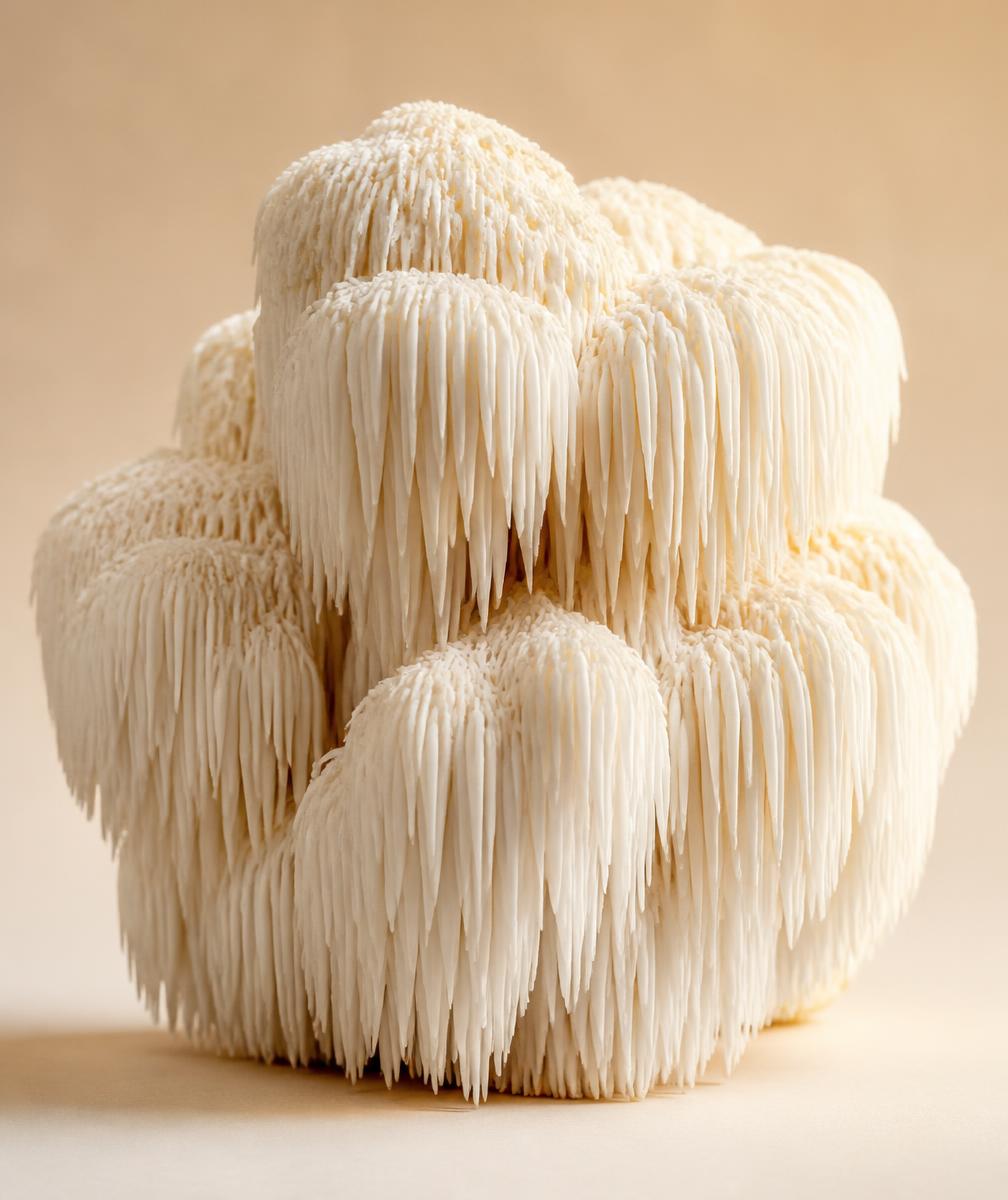
The cognitive-wellness hero ingredient. Cascading ivory spines, prized for its beta-glucan content and its clean, delicate profile.
Nairobi, Kenya · Medicinal mycology
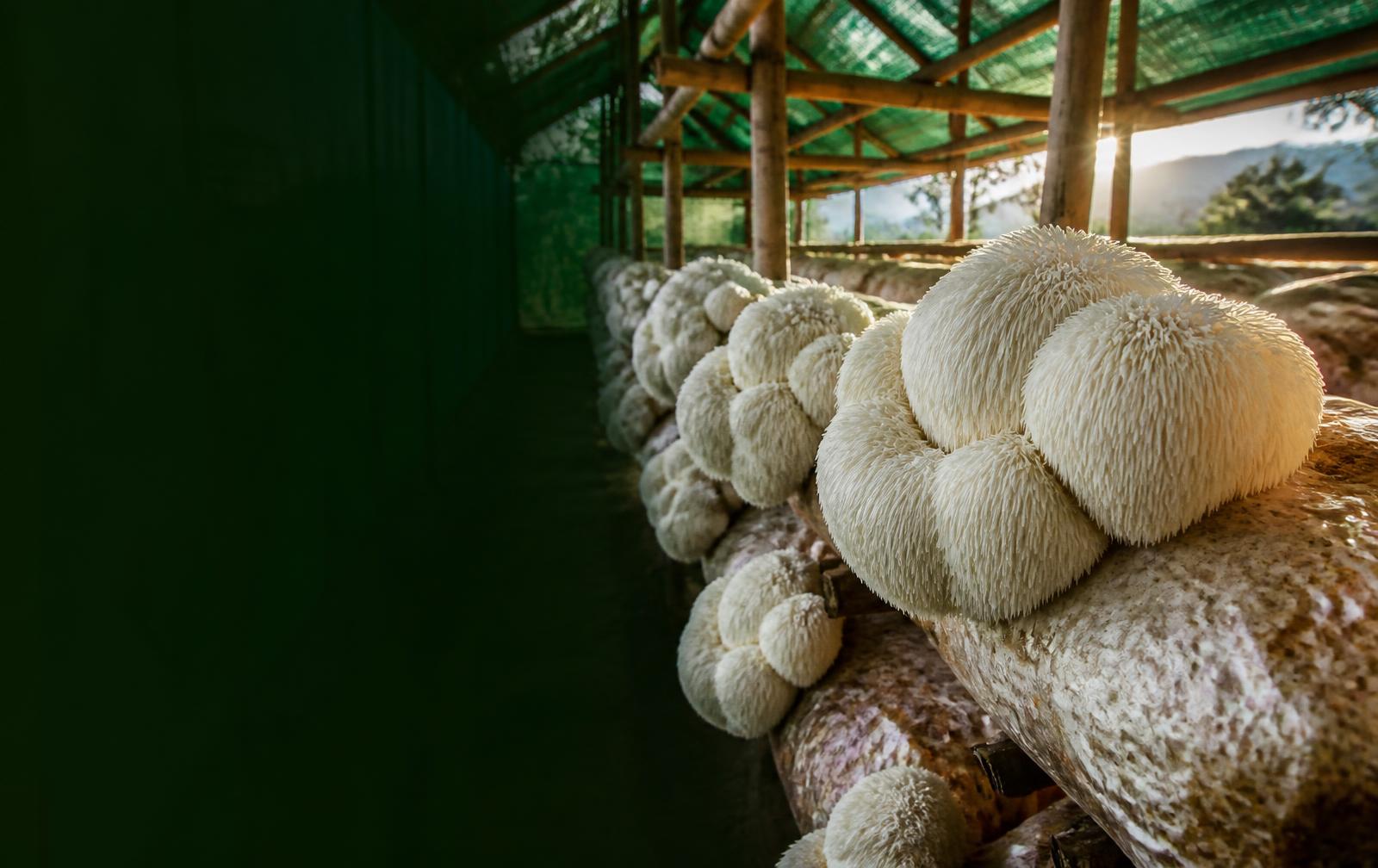
An integrated production, processing and export platform for Lion's Mane, Reishi and Cordyceps, grown on Kenyan agricultural waste with a network of smallholder farmers.
We are not building a farm. We are building the system a category needs — genetics, inputs, farmer networks, processing and export discipline, in one place.
Our mushrooms
Hericium erinaceus
The cognitive-wellness hero ingredient. Cascading ivory spines, prized for its beta-glucan content and its clean, delicate profile.
Ganoderma lucidum
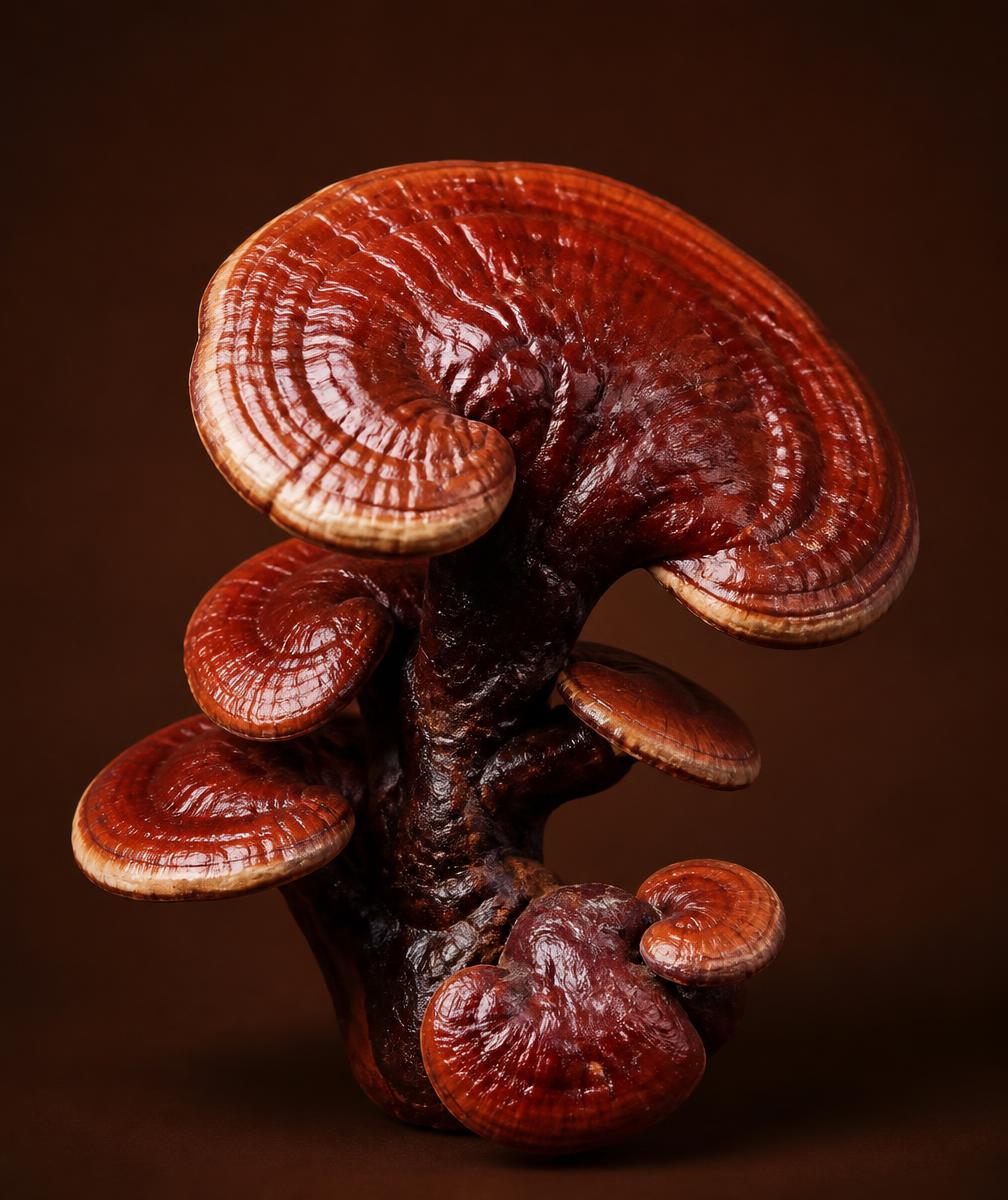
The lacquered “mushroom of immortality”. CordyKen works with indigenous Kenyan Ganoderma strains alongside established genetics.
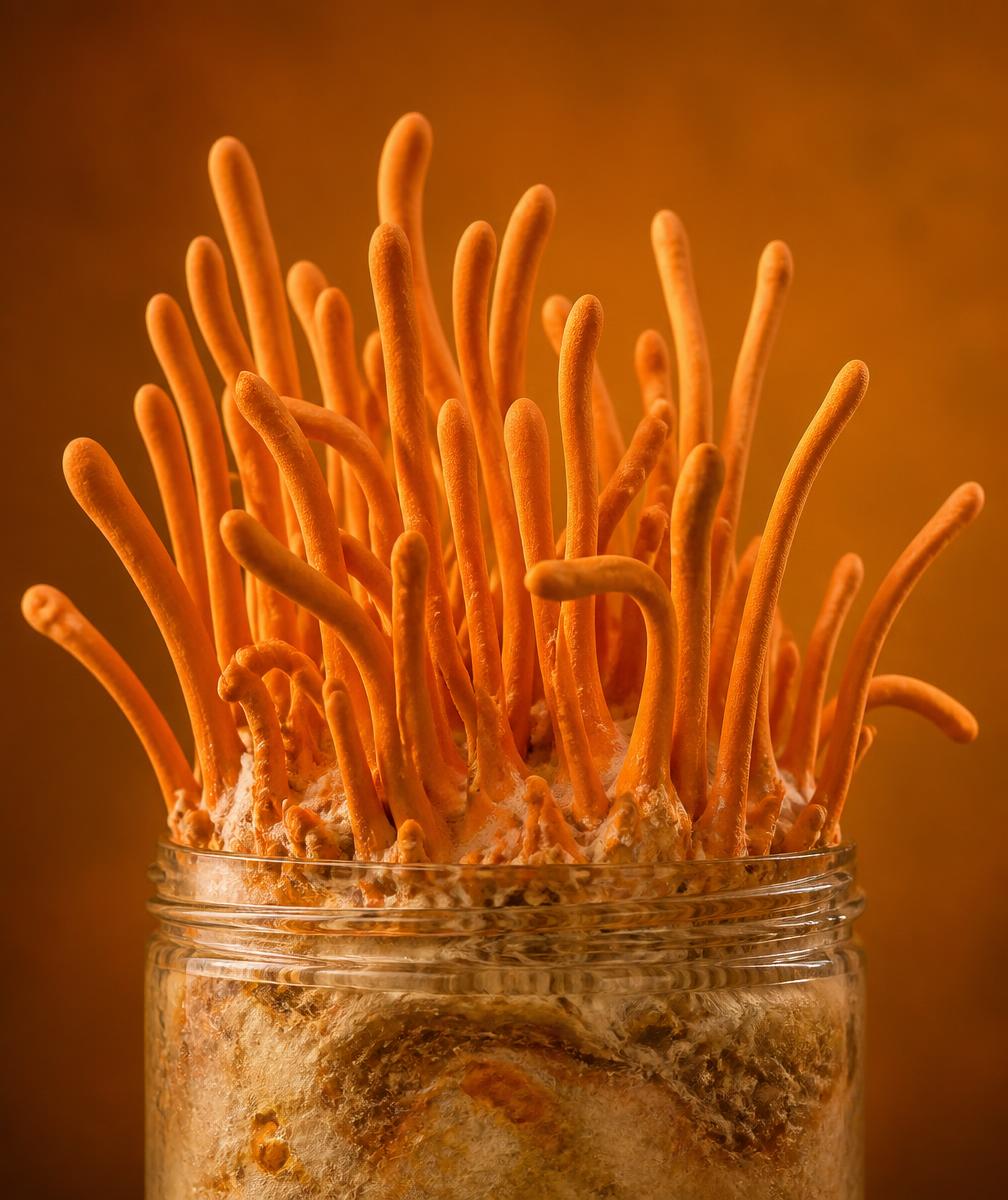
Cordyceps militaris
Brilliant orange club-shaped fruiting bodies. A later-phase species in the CordyKen portfolio.
The platform
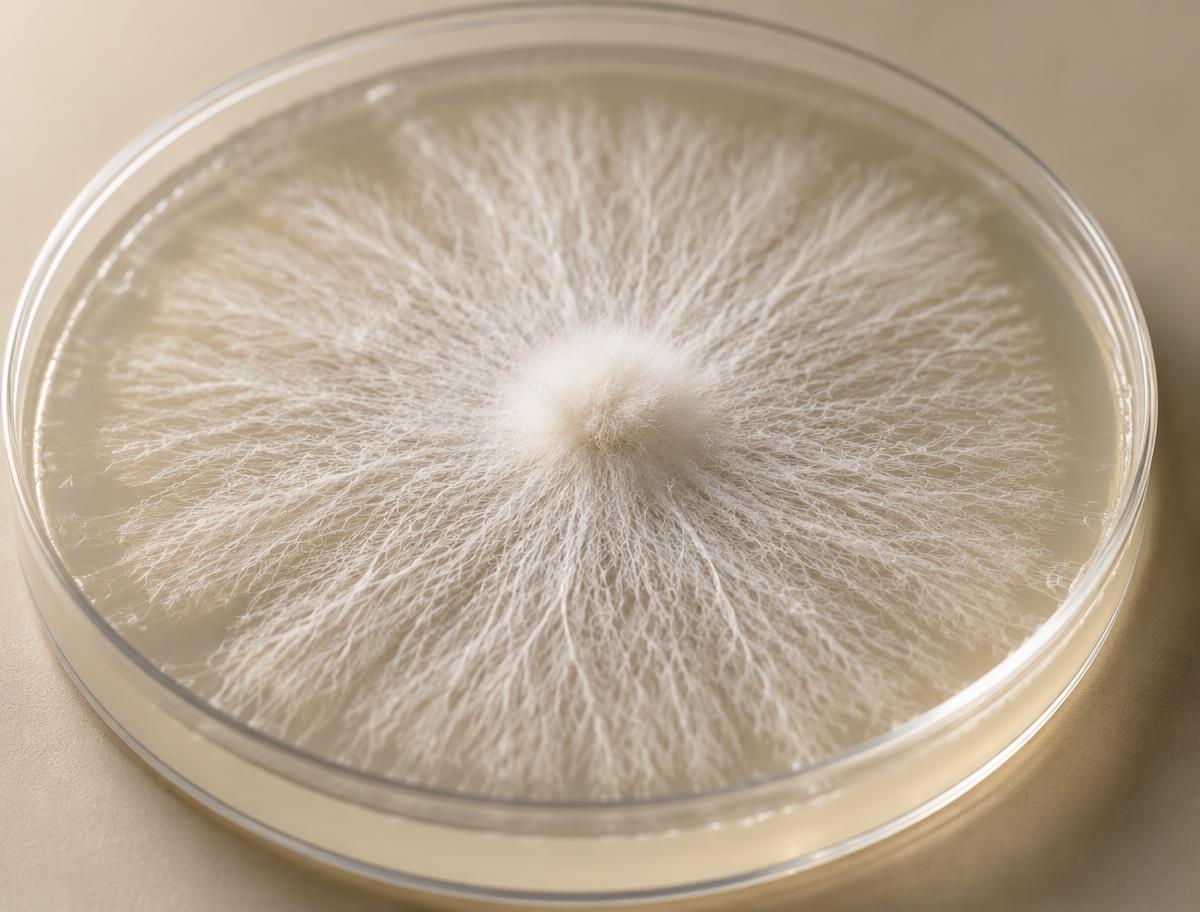
Tissue-culture strain development, including indigenous Kenyan cultures alongside imported elite genetics.
Ready-to-grow sterilised, inoculated grow bags produced from Kenyan agricultural waste.
In-house production alongside a trained network of outgrower farms.
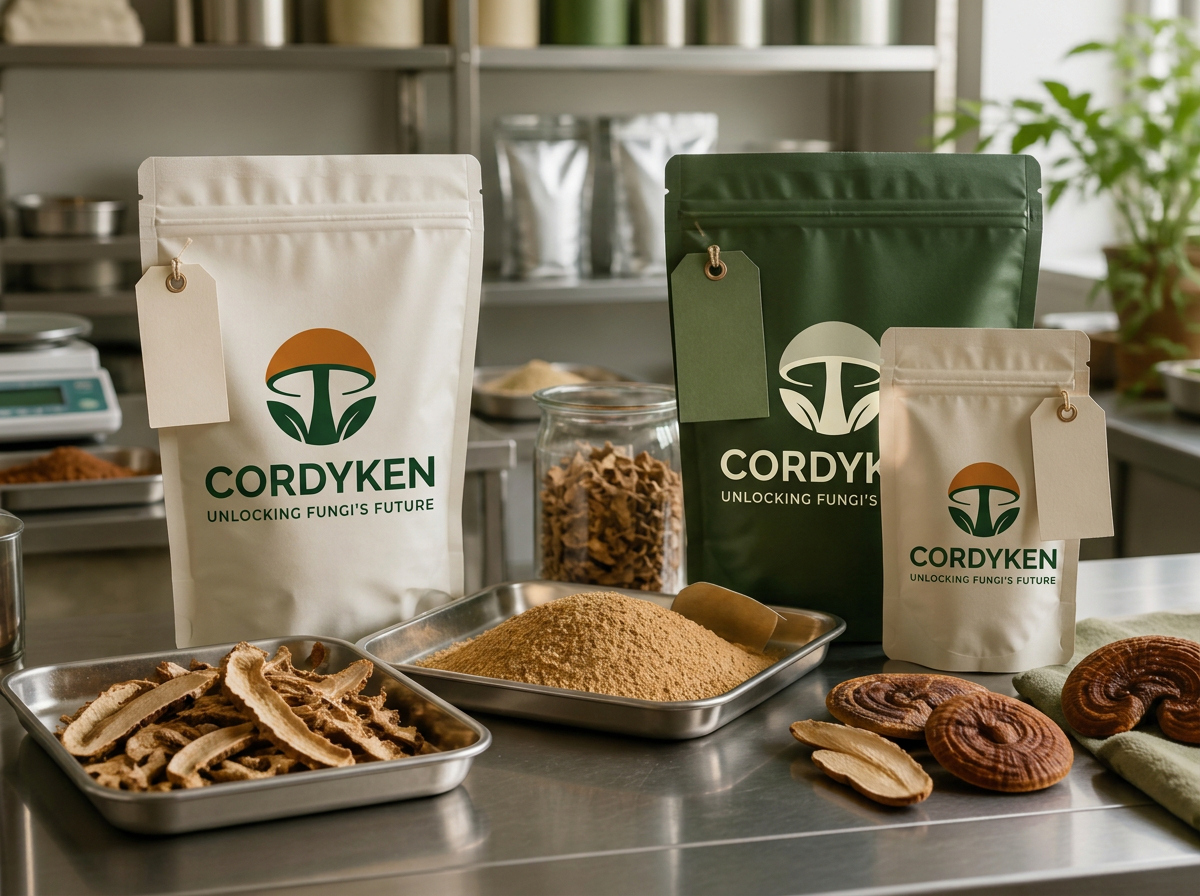
Aggregation, drying, milling and packaging into dried fruiting body and standardised powder.
Quality-assured supply to international B2B manufacturers.
Substrate is made to spec, not bought on a spot market.
The same substrate line serves Kenya's existing oyster and button growers — we add a species, not a livelihood.
CordyKen is building the Certificate of Analysis pathway for medicinal mushrooms in Kenya where none previously existed.
Tissue culture & R&D
Everything downstream of the laboratory — the yield a farmer gets, the potency a buyer tests for, the consistency an export contract depends on — is decided by the genetics and the formulation.
CordyKen maintains and develops its own cultures in-house, working with imported elite Lion's Mane genetics alongside indigenous Kenyan Ganoderma strains isolated from local material.
Grain spawn produced under controlled conditions, so quality is set at the start of the chain rather than corrected at the end of it.
Systematic trial work across Kenyan agricultural waste streams, testing formulations for biological efficiency, contamination resistance and bioactive content.
Beta-glucan and triterpene testing, heavy metal and aflatoxin screening, and the Certificate of Analysis pathway that lets CordyKen sell into regulated international markets.
Circular by design
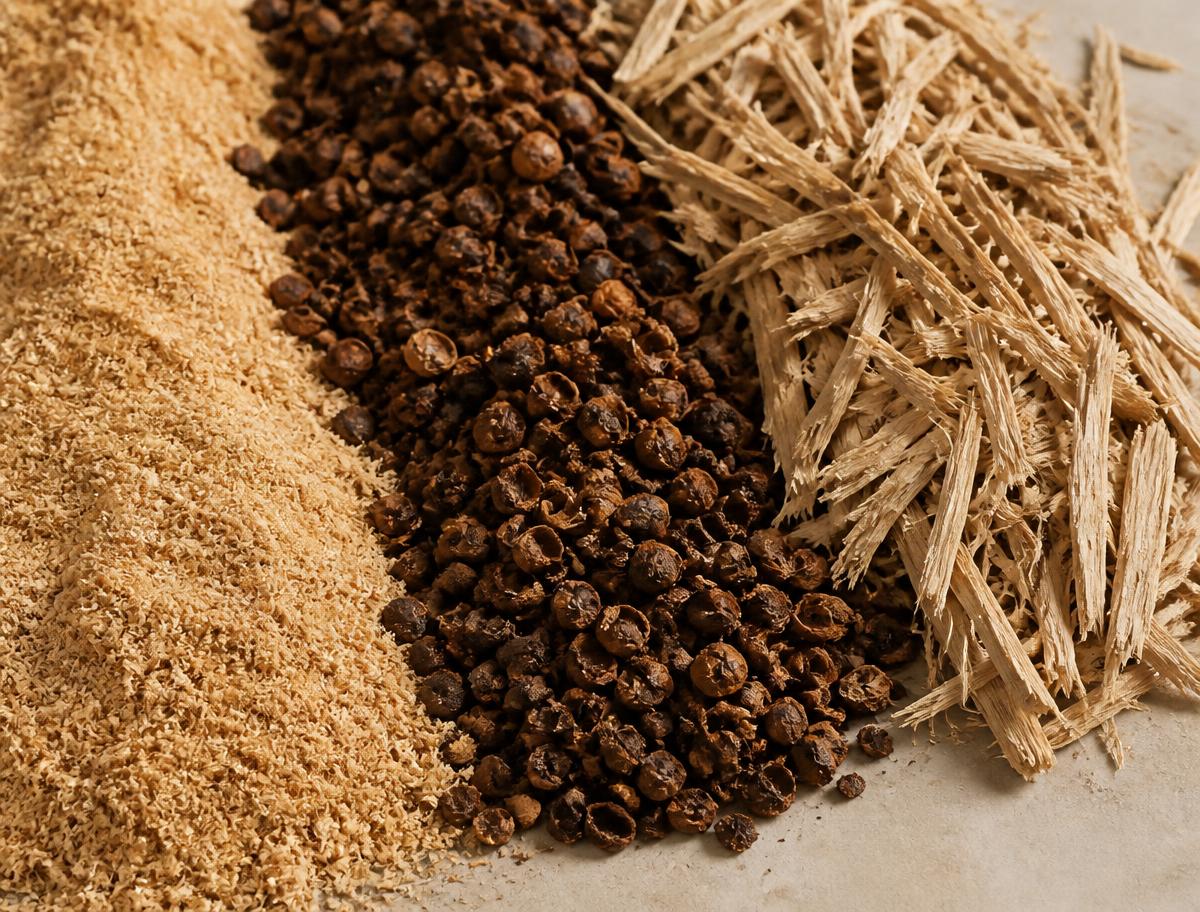
CordyKen substrate is built from Kenyan agricultural and agro-industrial waste — sawdust from agroforestry species, coffee husk and sugarcane bagasse that would otherwise be burned. Farmers earn from the growing cycle. Spent substrate returns to the land as compost. It is a circular loop with a livelihood in the middle of it.
The outgrower model
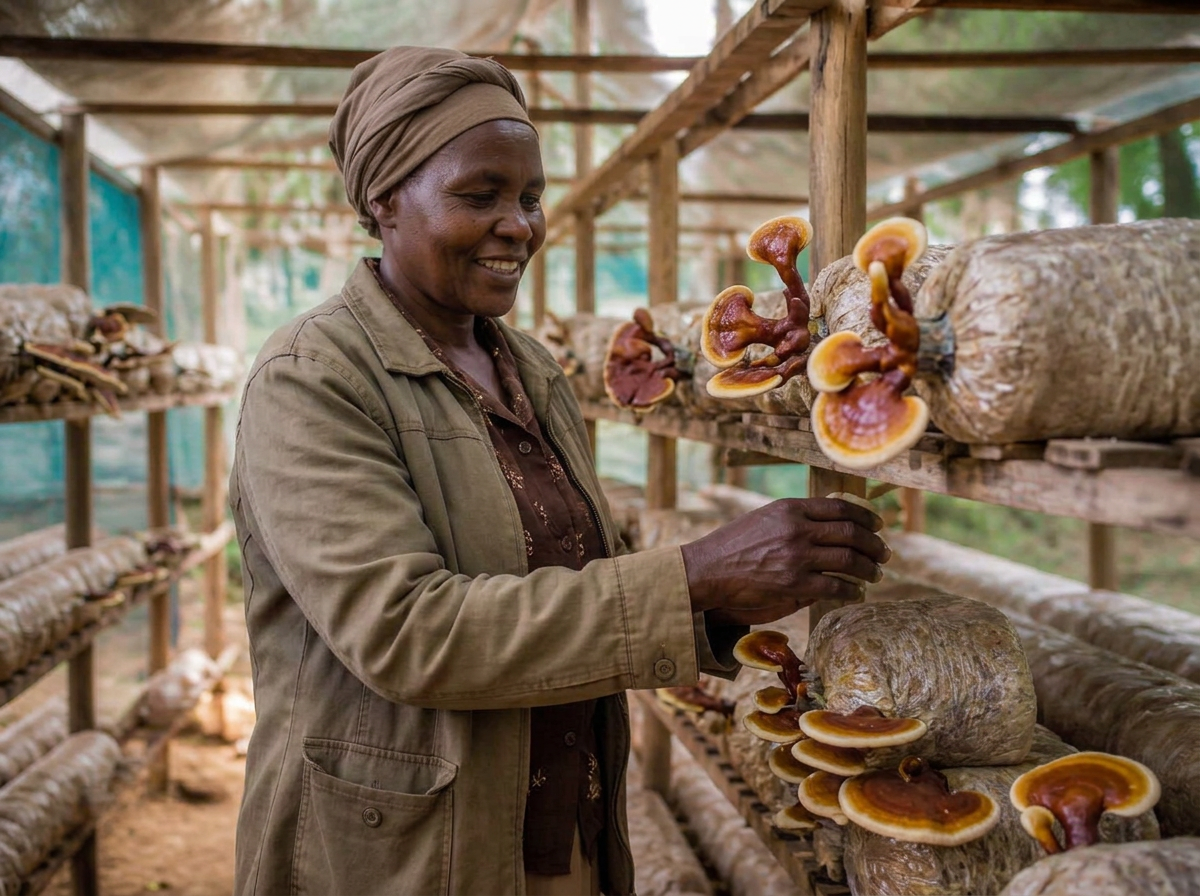
CordyKen partners with trained Kenyan smallholders and existing commercial growers to cultivate Reishi mushrooms from ready-to-grow cultivation bags. Farmers receive training, delivered Reishi cultivation bags, ongoing technical support, and a guaranteed buy-back arrangement. CordyKen takes the offtake risk and the processing risk so the farmer doesn't have to.
From an experienced mycology team.
Spawned Reishi cultivation bags, prepared by CordyKen and delivered ready to fruit.
A fair buy-back arrangement agreed before production starts.
Reishi grows on hanging cultivation bags in unused space in existing sheds — no new land to clear.
Quality & export readiness
Beta-glucan and triterpene testing as a standard part of the product, not an afterthought.
Heavy metal and aflatoxin control designed around international food-safety thresholds, including a deliberate exclusion list of high-risk substrate inputs and sourcing regions.
Product traceable from substrate batch through farm to finished lot.
CordyKen is actively building toward international quality and export certification.
CordyKen makes no medical, disease or treatment claims. All products are supplied as food and nutraceutical raw materials.
Why Kenya, why now
Global buyers — from the UAE and the wider Gulf to the UK, the US and Australia — are looking for dependable new sourcing origins with real quality discipline. Kenya offers strong production economics, deep agricultural capability, a large existing smallholder growing base, and abundant hardwood-equivalent agricultural waste. Africa is the next credible origin for medicinal mushrooms — and it needs a supply chain built properly from the start.
Quality output at a fraction of European or North American cost.
Kenya already has skilled commercial mushroom farmers.
Lab-verified African potency, grown on circular inputs, with smallholder inclusion built into the model.
Investment & partnership
CordyKen is building the production infrastructure, farmer network, quality systems and export relationships required to make African medicinal mushrooms a credible global supply source. We are open to conversations with investors, grant funders, development finance partners and strategic partners.
Integrated platform — genetics through export, under one roof.
Inclusive supply chain — smallholder participation built into the unit economics.
Circular inputs — agricultural waste as the production base.
Start a conversation
For buyers & off-takers
For farmers